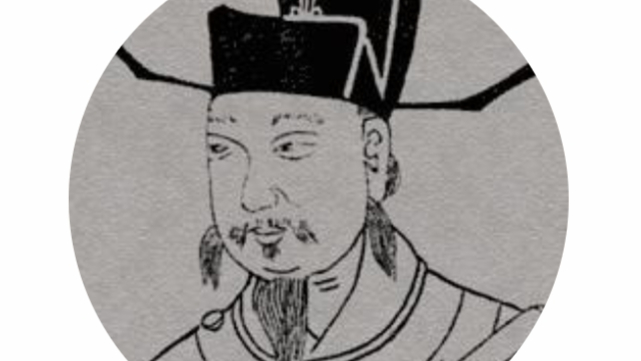
Shen Kuo
Introduction
Shen Kuo (1031–1095) was a renowned polymath of the Song Dynasty (960-1127). He was an esteemed scholar, scientist, and statesman who made significant contributions to various fields of study, including astronomy, mathematics, meteorology, geography, and mineralogy, among others. His work and insights laid the groundwork for future advancements in Chinese science and technology.
Early Life and Education
Shen Kuo was born in Qiantang (modern-day Hangzhou), Zhejiang province, during the Northern Song (960-1127) period. He came from a well-educated family, which provided him with the opportunity to pursue a comprehensive education. Under the tutelage of his father, Shen Zhou, who was a government official, Shen Kuo developed an early interest in the natural sciences and mathematics. His outstanding intellectual capabilities enabled him to pass the imperial examinations, which opened the door to official positions in the government.
Political Career and Contributions
Shen Kuo held various important positions throughout his career. He served the Song court in multiple capacities, such as the Director of the Directorate of Astronomy, where he was responsible for astronomical observations and calendar formulation. Shen's innovative work in this field included the compilation of star tables and the observation of celestial phenomena.
As a statesman, Shen Kuo was involved in diplomatic missions and played a crucial role in negotiating peace treaties. He also contributed to agricultural policies and water management projects, most notably in the Grand Canal system, which was critical for transportation and irrigation.
Scientific Achievements
One of Shen Kuo's most notable contributions was his work in geology and geomorphology. He is credited with developing early theories regarding the processes of sedimentation and erosion. Shen's observations led to the recognition of the concept of land formation and the understanding that land could change over time due to natural forces.
In the field of mathematics, Shen Kuo made advancements in the study of the "celestial sphere" and improved the armillary sphere—a model representing the celestial circles. His contributions to mathematical astronomy were significant, as they enhanced the accuracy of astronomical observations.
The Dream Pool Essays
Shen Kuo's most famous work is the "Mengxi Bitan" or "Dream Pool Essays," a comprehensive collection of essays covering his thoughts and discoveries in various scientific disciplines. The work serves as an encyclopedic record of Chinese knowledge at the time and includes discussions on topics such as optics, music theory, magnetism, and the invention of movable type printing.
In the "Dream Pool Essays," Shen Kuo discussed a variety of scientific and cultural topics, including music, reflecting the cultural importance of music in the Song Dynasty. This account exemplifies Shen's appreciation for the arts alongside his scientific pursuits.
Legacy
Shen Kuo's intellectual contributions have had a lasting impact on Chinese and global scientific thought. His interdisciplinary approach to science and his commitment to observation and empirical analysis set a precedent for future scholars. Shen's work continues to be studied and celebrated for its depth and breadth, reflecting his enduring influence on the fields he explored.
Shen Kuo remains a prominent figure in the history of Chinese science, embodying the spirit of inquiry and innovation that characterized the Song Dynasty. His legacy is preserved in his writings and the advancements that arose from his pioneering work in various scientific fields.








